
National Conservatism’s Jewish Problem
by Daniel Goldman

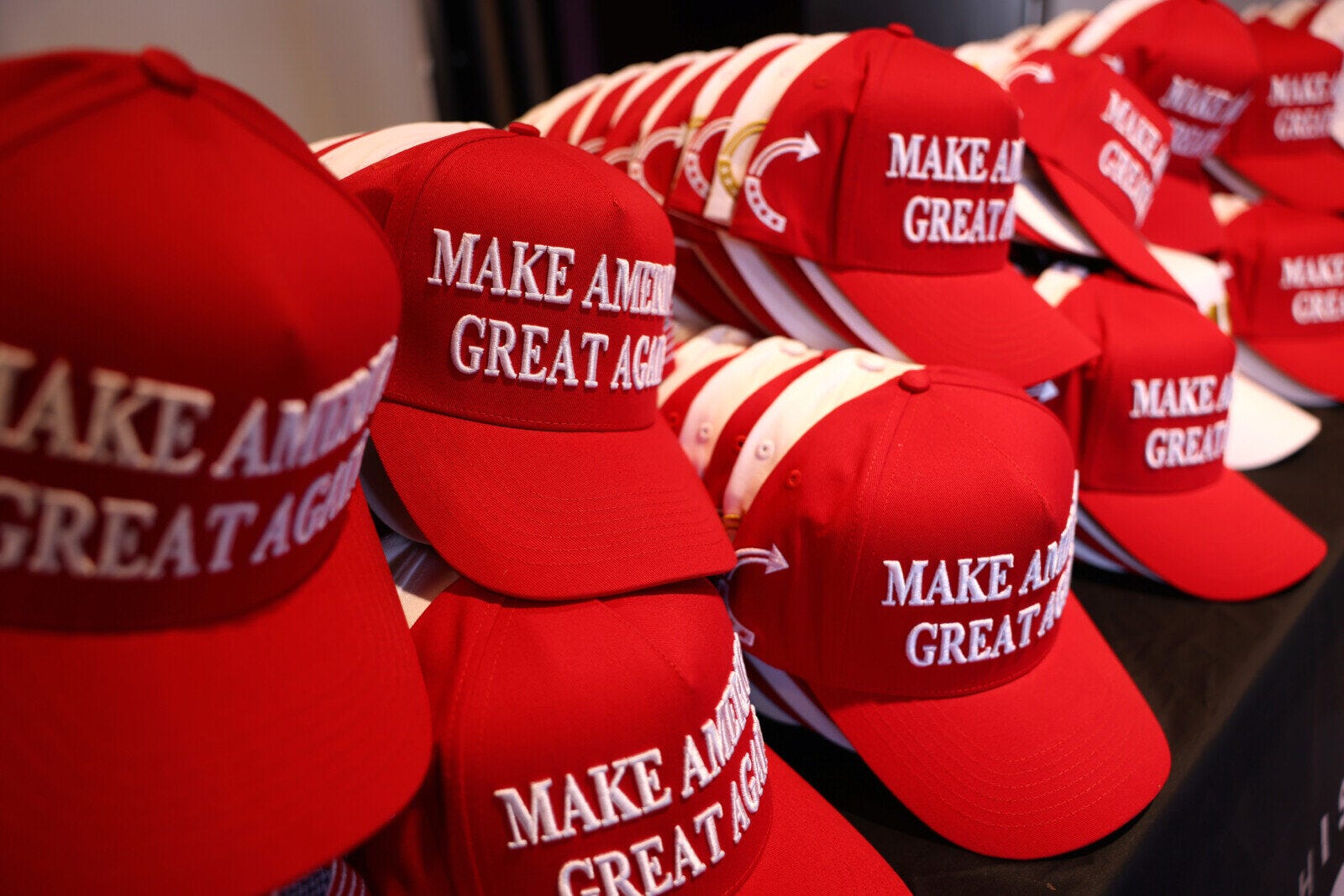
credit: Gage Skidmore, via Wikimedia Commons
Daniel Goldman reviews the confirmation hearing for Jeremy Carl and his views about Jews, arguing that he is building an intellectual framework increasingly used by a current within American conservatism. Goldman warns that Carl’s ideas indicate that part of American conservatism regards the Jewish presence in the United States as a problem to be solved through conversion to Christianity.
On February 12, 2026 Jeremy Carl, President Donald J. Trump’s nominee for Assistant Secretary of State for International Organization Affairs, the post overseeing U.S. relations with the United Nations, faced a contentious Senate confirmation hearing. Carl is a senior fellow at the Claremont Institute, an influential institution in today’s American conservatism. He has a history of incendiary social media quotes, many of which were played back to him at the hearing. In a moment that reflected some bipartisan agreement, Republican Senator John Curtis of Utah announced his opposition, citing Carl’s ‘anti-Israel views and insensitive remarks about the Jewish people.’ Carl, having previously thanked Trump and Secretary Rubio on X for his nomination, showed no contrition. However, on March 10, 2026, Carl withdrew his candidacy due to a lack of Republican support.
At first glance, the Carl episode is another career going down in flames because of social media posts. However, a closer investigation demonstrates that Carl is hostile to the notion of a ‘Judeo-Christian’ America, a concept that began as a post-war expression of interfaith solidarity and in recent times has been used by many Jewish conservatives (and some non-Jewish conservatives) as a prominent political principle. Worse, Carl is not a fringe character. The views he would have brought to the State Department have become normalised among American conservatives. An examination in context of a recent podcast on which he appeared, entitled ‘The Christian Ghetto,’ show that his social media statements reflect a thought out worldview. Carl is a builder of an intellectual framework used by a significant current within American conservatism.
The tension is at the core of the current outburst of antisemitism on the American Right, although this does not mean that all the players are per se antisemitic. However, given that Trump nominated Carl and the support from the MAGA intellectual base, it is a case study in the direction of travel for the current right wing of American politics.
THE RALLY
What happened after Carl’s unsuccessful hearing was telling. Rather than distance themselves from his objectionable comments, key figures across American conservatism rallied to his defence. Strained though these apologetics for Carl may seem, they indicate how acceptable his views have become.
Batya Ungar-Sargon, the self-described ‘MAGA leftist,’ NewsNation host, and prominent Jewish conservative media personality, set the tone: ‘Feels like there are enough real antisemites out there to expose. @realJeremyCarl is not one of them, in fact, many of the real ones hate him, too.’ Michael Doran, a Hudson Institute senior fellow and influential Middle East policy voice, amplified her message and added his own: ‘So true. Jeremy Carl is a decent and serious man. He publicly denounced Candace Owens. Fuentes blocks him. Groypers attack him nonstop. He is relentless about dismantling the UN and ICC because he understands they will be weaponised against Americans. He is one of the few inside America First who defends Israel. The attacks on him are unwise and self-defeating.’ Ryan Williams, the president of the Claremont Institute, was most direct of all: ‘Jeremy is a patriot and should be confirmed. Contrary to the hysteria from Dem Senators (and weak/confused/midwit Republicans), here being parroted by CNN, Jeremy is none of the bad words. He’s a gentleman, an excellent and conscientious colleague, a loving and proud father of 5, and a first-rate scholar.’
The most significant support came from Saurabh Sharma. He called Carl ‘one of the most level-headed, clear-thinking, and capable political minds alive. And a true polymath to boot. Shame on some in the Senate for trying to deny the President a top-draft pick for his team.’
Sharma protected Carl because both are integral to today’s American conservatism. At the heart of Trump’s Make America Great Again (MAGA) movement and its takeover of American conservatism, Sharma serves Trump as a Special Assistant to the President for Personnel, meaning he helps decide who gets appointed to government positions. Before this post, Sharma was the president of American Moment, the organization that trains and places conservatives in congressional offices and the administration. He was the executive director of the Edmund Burke Foundation, which runs the National Conservative (NatCon) conferences and which puts into action Dr. Yoram Hazony’s project to promote national conservatism. Sharma personally directed NatCon 4, the September 2024 Washington conference at which Carl delivered a speech ‘On the Persecution of Whites in America.’ At NatCon5, a year later, Thomas Klingenstein, the chairman of the Claremont Institute, declared that the United State’s greatest problem is ‘white guilt.’ Claremont is represented on the advisory board of the Heritage Foundation’s ‘Project 2025’, which wrote the blueprint for the second Trump administration.
The defence that Sharma and others advanced was consistent: Carl cannot be an antisemite because actual antisemites, such as the Nick Fuentes and his supporters (the Groypers), attack him. Anyone who says otherwise is either hysterical, weak, confused, or stupid. This framing treats antisemitism as a binary. Either you are with Fuentes, a Holocaust denying fan of Hitler and Stalin, or you are not an antisemite. These MAGA ramparts crumble when you actually listen to Carl’s podcast. The architecture of Carl’s argument is designed to occupy the space between explicit, Fuentes-style Jew-hatred and the kind of deniable, theologically sophisticated, institutionally credentialed hostility that never needs to use a slur.
WHAT THE SENATORS HEARD
The hearing produced damning soundbites. Senators read Carl’s words back to him: that ‘Jews have often loved to play the victim,’ that ‘the Holocaust dominates so much of modern Jewish thinking,’ that Hitler is ‘always the convenient kind of bad example,’ that the Civil Rights Act is an ‘anti-white weapon,’ and that the Great Replacement, a conspiracy theory that posits a deliberate plot to replace white populations with non-white immigrants, is ‘real.’ Carl admitted that some of his comments about the Holocaust were ‘absolutely wrong.’ Senator Cory Booker told him: ‘Dear God, I pray for us if we let somebody like you represent us to diverse nations of the world.’
CNN’s KFile had previously revealed that Carl deleted at least 5,000 social media posts ahead of his nomination, and even requested their removal from the Internet Archive’s Wayback Machine. Among the surviving archived posts: sympathy for January 6 rioters whom he called ‘political prisoners,’ a claim that Capitol riot defendants had it worse than Black Americans under Jim Crow, and a call for the death penalty for Randi Weingarten, the head of the American Federation of Teachers, who is gay and Jewish.
WHAT THE SENATORS MISSED
The hearing, for all its drama, only scratched the surface. The revelation lies in Carl’s October 2024 podcast appearance, which the senators quoted selectively but failed to analyse as a whole.
The episode, entitled ‘The Christian Ghetto: Jeremy Carl — The Jewish People and Christianity: A Personal Reflection’ was part of a series called ‘Seeking the Hidden Thing.’ It is one of several podcasts on the American right recently dealing with the ‘Jewish Question’ or Jews per se. Carl, who was raised in an assimilated Jewish family and converted to Christianity, was introduced in the context of a group chat in which somebody reminded the others that Carl was Jewish. Carl corrected the framing: ‘I didn’t want anybody to feel like they needed to pull their punches because I was there. Because I would somehow be offended because my identification is ultimately as a Christian.’
In the comments that followed, Carl presented a theologically grounded, historically elaborated, statistically ornamented framework for understanding Jewish identity. According to Carl, Jewishness is a civilisational problem resolvable only through conversion to Christianity. Carl covered his intellectual tracks. He delivered his ideas with repeated disclaimers, appeals to data, and explicit rejections of conspiracy theories. There was none of the aggression of his social media posts. Instead, it was a thoughtful and thought-out worldview.
Carl’s framework proceeds step wise.
First, Carl establishes the empirical case. Jewish overrepresentation in elite institutions, he argues, is not a conspiracy. It is a maths problem: Ashkenazi IQ is roughly one standard deviation above the American average and Jewish political engagement roughly another standard deviation above the norm. Overlay the bell curves, and you have a group that is 2.5 percent of the U.S. population but ‘like 30 percent of billionaires’ and a disproportionate share of political donors, professors, and media figures. He even cites Doug Wilson, a Christian Nationalist theologian, who has said ‘The Jews are a high-performance people, And so when they are bad, they are really bad, but enough about the Frankfurt School, and when they are good, they are really good. But good or bad, just like the rest of us, they all need Christ.’
The disclaimers are essential to Carl’s method. ‘I’m not making some conspiracy,’ Carl says, ‘Simpler explanations are usually best.’ His caveats function as inoculation. They allow Carl’s framework to maintain the appearance of empirical sobriety while arriving at the identical conclusions to antisemitic conspiracy theory, namely that Jews wield disproportionate and often destructive influence.
Second, Carl constructs the theological explanation. Mangling Gershom Scholem’s work on Sabbatai Zevi, the seventeenth-century false messiah, Carl argues that Judaism carries a deeply messianic character, ‘they’re always looking for this Messiah.’ This Jewish impulse, once detached from religious orthodoxy, was redirected into secular political radicalism. ‘They burst onto this, all this energy as they’re kind of released from this religious fundamentalism,’ Carl explains. ‘But they lose that religious fundamentalist instinct. They just begin to apply it to different things. So it applies to left-wing politics in some way or it applies to Zionism in certain ways.’
The host, who calls himself kruptos (Greek for ‘hidden’) completes Carl’s thought: ‘You take this impulse of your refusal to embrace Christ… and then you begin to act out over the centuries in various ways.’ The host follows the trail of ideas that Carl leaves behind him: messianic energy plus the rejection of Christ generates a misdirected religious instinct leading to Marxism, Zionism, tikkun olam (repair the world) or progressive politics. Carl does not need to say it himself.
Third, Carl minimises the history of Jewish persecution. He reframes oppression of the Jews as partially self-inflicted, a consequence of bad Jewish behaviour. He acknowledges that Jews ‘were of course limited in the sorts of careers that they could choose in many cases in Christian Europe.’ He immediately pivots: ‘they were often the kind of oppressive out there. So they can’t be surprised that, you know, the average descendant of a Cossack peasant might be resentful to them historically.’
Indeed, Carl provides a a statute of limitations for the impact of the Holocaust. First-generation survivors ‘can and should tell their story.’ The second generation, Carl cites Art Spiegelman’s Maus, experienced real inherited trauma. But by the third generation? ‘Everybody has traumas in their past. Like how much are we going to kind of relitigate them?’ The host, again following Carl’s intellectual footsteps, then takes the argument to its destination: ‘How long are you going to rest on the Holocaust based upon how you’re treating the Palestinians?’ Carl’s response is: ‘Right, right. Yeah, no, I mean, I think that’s true.’
THE SPANISH EXPULSION SUCCESS STORY
Perhaps the most revealing discussion concerns Spain’s expulsion of the Jews in 1492. Carl raises it in the context of Jewish conversion to Christianity, his model for the resolution of the problem of Jewish identity. He tells his audience: ‘After there was basically mass conversions in Spain in 1492 as a result of Ferdinand and Isabella kind of finally reunifying Spain and kind of declaring if you were Jewish or Muslim, you needed either get out, huge numbers of Jews convert, their descendants become very disproportionately involved as some of the major Catholic saints and major Catholic religious figures of the century.’
Again, Carl’s framing is significant. Ferdinand and Isabella were ‘reunifying Spain’, not persecuting Jews. He reduces the mass expulsion to an ultimatum, ‘get out,’ without mention of the Inquisition, forced conversions under threat of death, the burning of conversos suspected of secret Jewish practice, or the destruction of one of the most culturally productive Jewish communities in history. Instead, Carl cites 1492 as a case study in the civilisational benefits of Jewish conversion. Look at all the wonderful saints it produced!
For a man who elsewhere argues that Jews should stop dwelling on the Holocaust, the selective amnesia about centuries of Christian persecution of Jews in Spain is instructive. Carl’s message is that conversion works, and its fruits justify the coercion that produced it.
FAREWELL TO JUDEO-CHRISTIAN AMERICA
All of this leads to the statement that should worry anybody invested in the notion that American conservatism is a safe or welcoming home for Jews. Midway through the podcast, Carl says plainly: ‘I don’t really believe in Judeo-Christian. I think America is a Christian nation. It is a nation that’s always had Jews in it.’
These comments directly challenge Hazony, the Israeli-American philosopher and builder of the national conservatism project. Hazony argues that Western countries should return to their Judeo-Christian ‘biblical heritage.’ Carl is not alone. Stephen Wolfe’s The Case for Christian Nationalism (2022), which Hazony blurbed, also rejects the Judeo-Christian framing of American conservatism. The Society for American Civic Renewal, co-founded by Claremont’s president Ryan Williams, requires members to affirm their alignment with ‘American and European Christian forebears’, no Judeo prefix required.
While Hazony is content to support books that reject his Judeo-Christian notions, he seems to have noticed where these ideas lead. In January 2026, Hazony addressed a conference organized by the Israeli Diaspora Affairs Ministry, and acknowledged the growing antisemitism within his national conservatism movement he helped to build. Interestingly, like Carl, he noted the anti-Jewish racism and then blamed the Jews. According to Hazony, the problem was that Jewish organisations had put insufficient effort into relations with nationalist Republicans. Characteristically, Hazony’s diagnosis located the problem outside his coalition’s own structure.
Except the structure is the problem. Carl, is a Claremont senior fellow, and a speaker at NatCon. The chairman of Claremont has donated over $400,000 to Hazony’s Edmund Burke Foundation, the home of the NatCon conferences. Claremont credentials national conservatism’s intellectuals through its fellowship programs. Claremont, as Carl’s podcast makes plain, is not Judeo-Christian, it is Christian. Jews are welcome only insofar as they accept minority status within a Christian order, or better yet, they follow Carl’s example and convert.
Carl frames his own conversion to Christianity as the resolution of a civilisational pathology. Jews who have not converted retain what he calls their ‘stubbornness.’ The 1492 converts produced great saints. The implication is that the correct Jewish response to Christian civilisation is assimilation through conversion, and that those who refuse are, at some level, responsible for the disorder that follows.
While Carl’s nomination is dead, his intellectual framework and his career as a conservative thinker are very much alive. What the Senate missed was that Carl said the quiet part about out loud. Carl’s intellectual framework defines a conservative movement that no longer deigns to use the polite fiction of a Judeo-Christian America. It regards unconverted Jews as bearers of a dangerous civilisational defect. Jewish conservatives are avoiding asking President Trump and Vice President JD Vance why they tolerate such views in the MAGA coalition. Perhaps the reason is that Jewish conservatives are not truly listening, and for Vance and Trump there is no political downside, only upside.